Separate remoteness from privacy
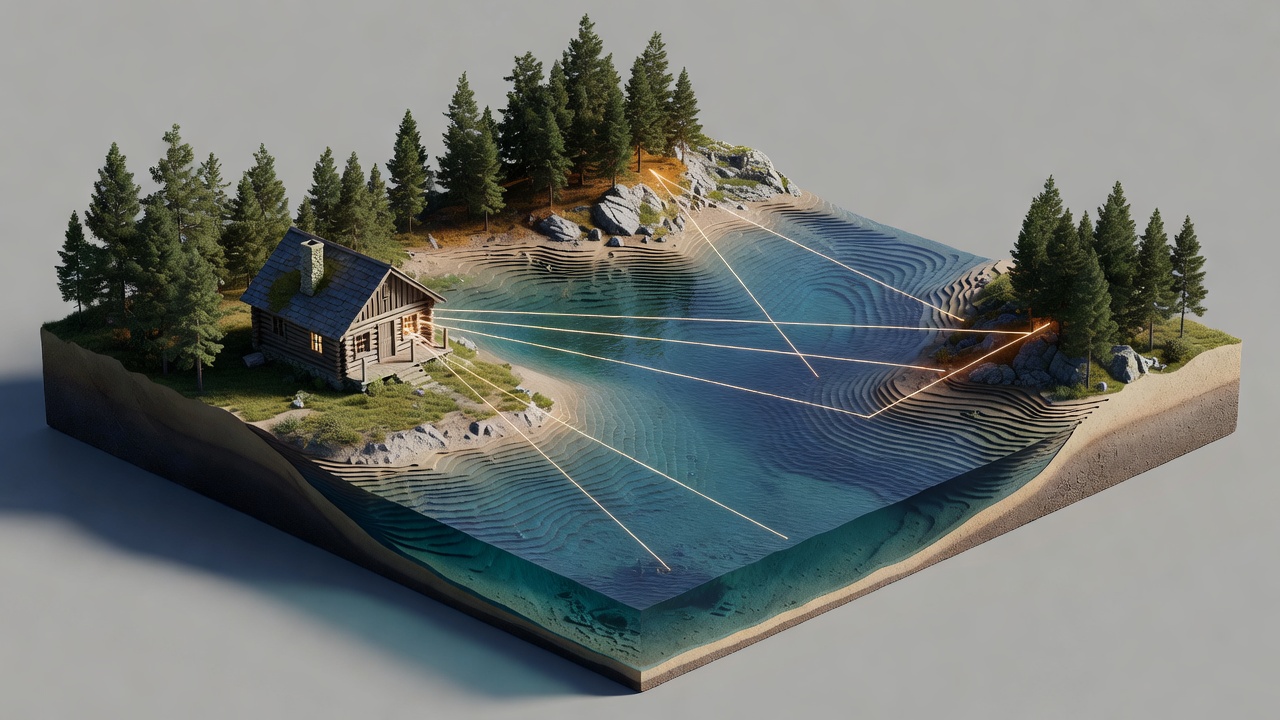
A long drive can create a powerful feeling of arrival without guaranteeing that the last few metres are secluded. A room may sit far from a town but close to a shared jetty, a staff route or another suite's terrace. Conversely, a carefully oriented room can feel sheltered on a relatively compact site. Begin with the immediate surroundings. Ask for the position of the exact room category, the routes people use and the location of communal facilities. “Remote” describes a relationship to other places; it does not describe every sightline through a wall.
Read the opposite shore
Water creates distance, but not necessarily screening. A terrace across a narrow inlet may face directly toward a bed even when the near shoreline is empty. Jetties and moorings can introduce viewpoints that a land-based site plan misses. A wide-angle photograph may make the opposite bank appear farther away than it feels in person. Request an ordinary view from the room and, if available, a plan showing the wider shoreline. Avoid converting a visual estimate into a privacy guarantee. Conditions can change with vegetation, occupancy and activity on the water.
Reflections are conditional
Reflective glass often looks reassuring in daylight photographs because the brighter exterior is prominent on its surface. That appearance is not an unconditional one-way effect. When the room is lit and the landscape is dark, the balance changes. Even in daylight, angles and close viewpoints may reveal more than expected. Manufacturer explanations from Pilkington are a better starting point than a casual promise of “privacy glass,” but the exact product and installation still matter. Treat reflections as a variable visual effect, not as a substitute for an opaque covering you can control.
Ask to close the room
Some guests want uninterrupted views until bedtime; others want to dress, read or sit quietly without checking the shore. Neither preference is unreasonable. Find out whether coverings screen the entire inhabited space, including the bathroom, entrance and any high glazing. Ask whether closing one area leaves another exposed. If the operator says the site is sufficiently isolated that curtains are unnecessary, consider whether that matches your own comfort rather than accepting it as a universal answer. The ability to choose when to be visible is a more useful measure than a marketing description of openness.
Access rights are not a visual amenity
A “private lake” or “private shoreline” can mean several things: ownership, an area reserved for guests, a private jetty or simply an absence of nearby buildings. These are not interchangeable. Finland's everyman's rights and Sweden's right of public access show why access questions require local context, although their rules also protect domestic privacy and do not allow unrestricted intrusion. Official guidance from Finland's environmental administration and the Swedish Environmental Protection Agency is preferable to assumptions. Ask the host about applicable routes and restrictions; do not infer legal exclusion from a phrase in an accommodation listing.
Consider light beyond the room
Bright outdoor lights can make a site feel exposed, disturb sleep and alter the experience of the night landscape. DarkSky International recommends lighting that is useful, targeted, low level, controlled and warm coloured. Those principles are helpful questions for a hotel, not proof that a particular property meets a certification. Birds also interact with glazing: reflections and transparency can create collision risks. The American Bird Conservancy's glass-collision resources explain why a beautiful reflective facade needs careful treatment. A privacy-first design should consider the living shoreline as well as the people inside the room.
Make a small evidence request
Before paying, ask for three things: a current site plan identifying your room, a night image with interior lights on, and a description of every privacy covering. Add one question about routine access: who passes the room, and when? A host may reasonably avoid sharing security-sensitive details, but should still be able to explain ordinary guest and service routes. Keep the reply with your booking documents. If the evidence remains vague and privacy is central to your trip, choose a room with less glazing or a more clearly screened layout. Transparency is an architectural choice, not an obligation.
Sources and further reading
- Pilkington — glass performance and product explanations.
- Finland's environmental administration — official guidance on everyman's rights.
- Swedish Environmental Protection Agency — public access and responsibilities.
- DarkSky International — responsible outdoor lighting principles.
- American Bird Conservancy — bird collisions and glass.
This is a practical reading framework, not a legal determination of access rights at any property.