The landscape is not the envelope
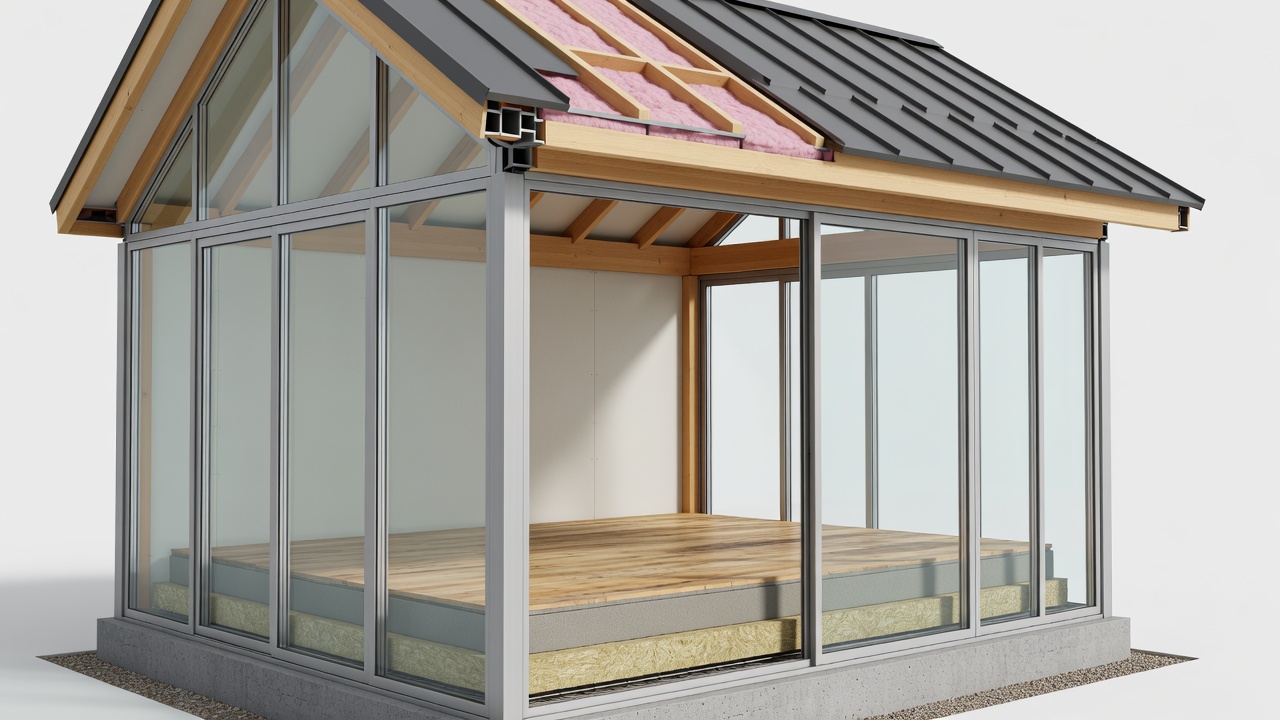
Glass accommodation offers an unusual promise: the room seems to withdraw so that the setting can become the main event. Yet the building still has to resist wind, shed rain, manage moisture and keep its occupants comfortable. A continuous view does not mean a continuous material. Panes meet frames, frames meet walls, and walls meet floors. These junctions can affect temperature and condensation as much as the centre of the glass. Ask about the complete room, rather than accepting a glazing adjective as a description of the entire building.
Two useful precedents, not hotel recommendations
Philip Johnson's Glass House in New Canaan, Connecticut, and Ludwig Mies van der Rohe's Farnsworth House near Plano, Illinois, are valuable architectural references. Both make the relationship between interior and landscape unusually explicit. Neither should be treated as a template that automatically suits a contemporary hotel guest. A museum or historic house has a different brief from a room where someone expects blackout, a screened bathroom and a warm floor. Their official interpretation helps explain the design lineage; it does not establish the performance of a newly marketed lakeside suite.
Read the glazing as a specification
“Double glazed” describes a broad arrangement, not a complete comfort guarantee. Pane coatings, cavity construction, edge details and frame materials can all matter. Manufacturer resources from Pilkington and Saint-Gobain distinguish heat transfer, solar control and other functions that marketing copy may compress into a single word. The EN 1279 series concerns insulating glass units; a reference to it is not a promise that a whole room will be warm, quiet or private. If an operator supplies a technical figure, ask what assembly it describes and whether it applies to the room you would actually reserve.
Sunlight is both amenity and load
A low sun across the water can be beautiful while also making a desk uncomfortable or a bed difficult to use. Glazing orientation, roof overhangs, external screens and internal blinds contribute in different ways. A curtain may control glare and provide privacy without stopping all incoming solar heat. Ask how the room is shaded, whether guests can operate the controls themselves, and what happens when the room is unoccupied during the day. An image made on an overcast morning cannot tell you how the same space behaves during a clear summer afternoon.
Air must still move
The apparently sealed room raises a practical question: where does fresh air come from? An opening panel may work well in mild weather, but insects, wind and noise can make it less useful at other times. Mechanical ventilation can supply air without an open window, although the sound and controls matter to a light sleeper. Check whether the bathroom has extraction, whether ventilation runs overnight and whether any openable elements have screens. Do not assume that air conditioning provides fresh air, or that a large glass door is a comfortable substitute for a secure night vent.
Privacy belongs in the construction brief
A wall of glass needs somewhere for its coverings to go. Tracks, blind housings and power supplies are architectural details, not merely decorative additions. Roof glazing is particularly easy to admire in photographs and easy to overlook when asking about screening. Consider whether a guest can close the room fully without climbing, moving furniture or exposing themselves to the path outside. Privacy should remain available during an equipment fault. A manually usable curtain can be more reassuring than a dramatic automated system whose fallback arrangement nobody has explained.
Use references without borrowing their claims
Juvet Landscape Hotel in Valldal, Norway, designed in part by Jensen & Skodvin, is a useful study in framing landscape and placing rooms within terrain. Its river-valley setting must not be relabelled as a secluded lakeside location. The broader lesson is about the specificity of a site: orientation and ground conditions help define what a room can offer. When comparing accommodation, look for evidence about the exact building and room category. A famous architectural reference, a glass manufacturer's brochure and an atmospheric render answer three different questions. None replaces a direct operational answer from the host.
Sources and further reading
- The Glass House — official architectural and historical information.
- Edith Farnsworth House — official interpretation of the house and site.
- Pilkington and Saint-Gobain Glass — glazing terminology and technical resources.
- BSI — standards catalogue, including the EN 1279 series.
- Juvet and Jensen & Skodvin — property and architectural sources.
Technical resources explain concepts; we have not tested individual hotel glazing or certified any property.